
Smartphone, QR code or tablet: 3 simple ways to clock in
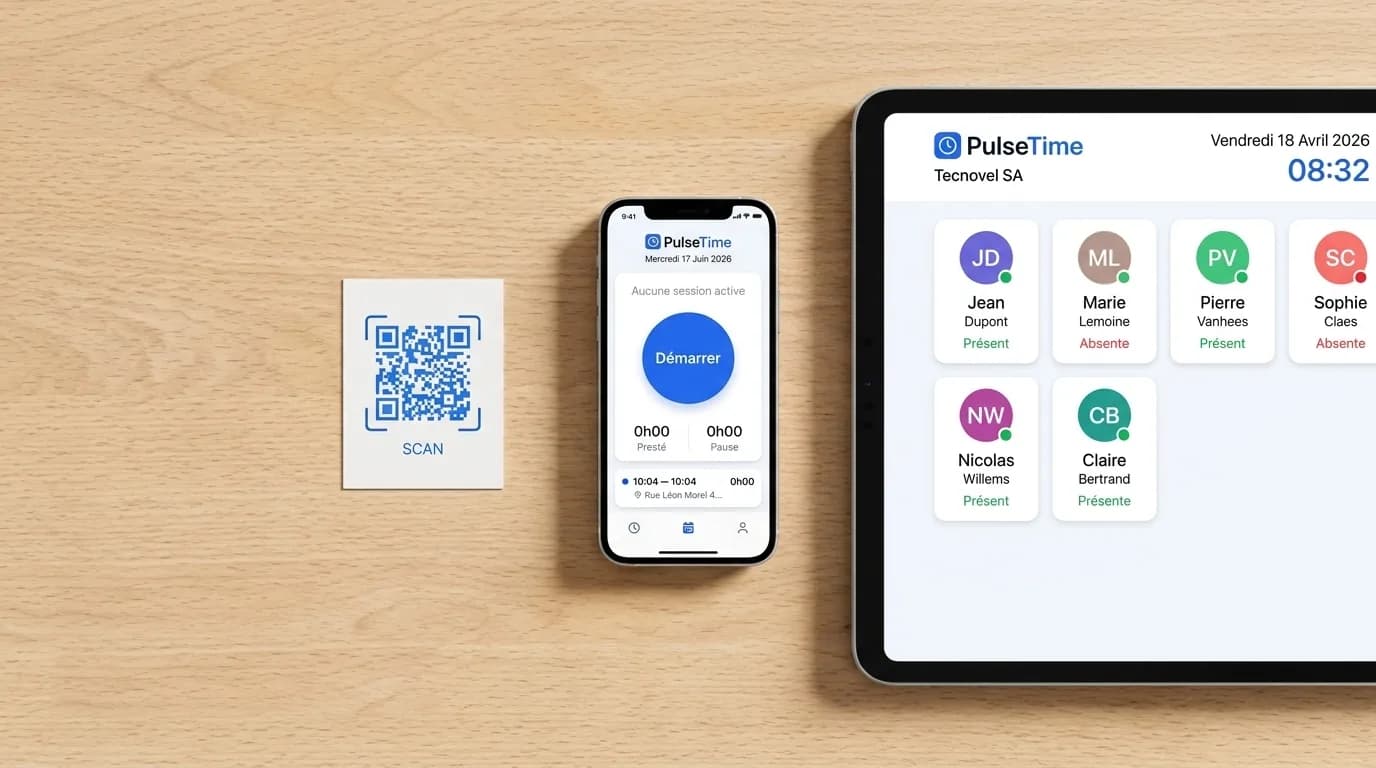
Working-time registration no longer means installing an overpriced time clock. Today, your team members clock in with a single gesture, and you choose the method that fits your line of work. Here are three of them, with their use cases.
1. The smartphone, with GPS
Each team member clocks in from their phone, in one tap. Geolocation confirms that they are indeed at the workplace at the moment of clocking in. It is the go-to method for mobile teams and construction sites, wherever there is no fixed point: the worker arrives on site, clocks in, and it's done, wherever they are.
2. The QR code
A QR code displayed at the entrance to the site: the team member scans it on arriving and leaving. Simple, visual, with next to nothing to install. Perfect for a single access point (the entrance of a shop, a workshop or a restaurant) and for people less comfortable with an app.
3. The reception tablet
A tablet placed at reception acts as a shared clocking kiosk: everyone identifies themselves in a few seconds on arriving. Ideal for places with a common point of passage, such as an office or a hospitality venue, and for teams who don't use their personal phone.
Which one to choose?
The right instinct: start from your field, not from the technology.
- ✓Construction site or mobile team → smartphone with GPS;
- ✓Shop, workshop, restaurant → QR code at the entrance;
- ✓Office, reception → tablet as a kiosk.
And nothing forces you to choose a single method: you can perfectly well mix them by team. Your sales staff clock in on the smartphone, the workshop with the QR code, reception on the tablet, and everything feeds back to the same place.
And geolocation, is it legal?
Yes, provided it stays proportionate, which is the case here. The location is only recorded at the precise moment of clocking in, to verify presence at the workplace: it is not a continuous tracking of movements. Used this way, with a clear and limited purpose, geolocation at clock-in complies with the GDPR. It is even an asset: it makes the record reliable and cuts disputes short.
No hardware, no training
All three methods work from devices you already have: a smartphone, an entry-level tablet, a poster for the QR code. No time clock to buy, no wiring, no maintenance. And on the team side, there is nothing to learn: clocking in is one tap. Setup is measured in minutes, not days.
Ready in 5 minutes, compliant with 2027
Whatever the method, the goal is the same: a reliable, timestamped record that is easy to export to your payroll provider. That is exactly what PulseTime offers, with no hardware to buy, no commitment, and already aligned with the working-time registration obligation planned for 2027.
This article is for information only and does not constitute legal advice.