
The paper time sheet is over: 5 reasons to go digital
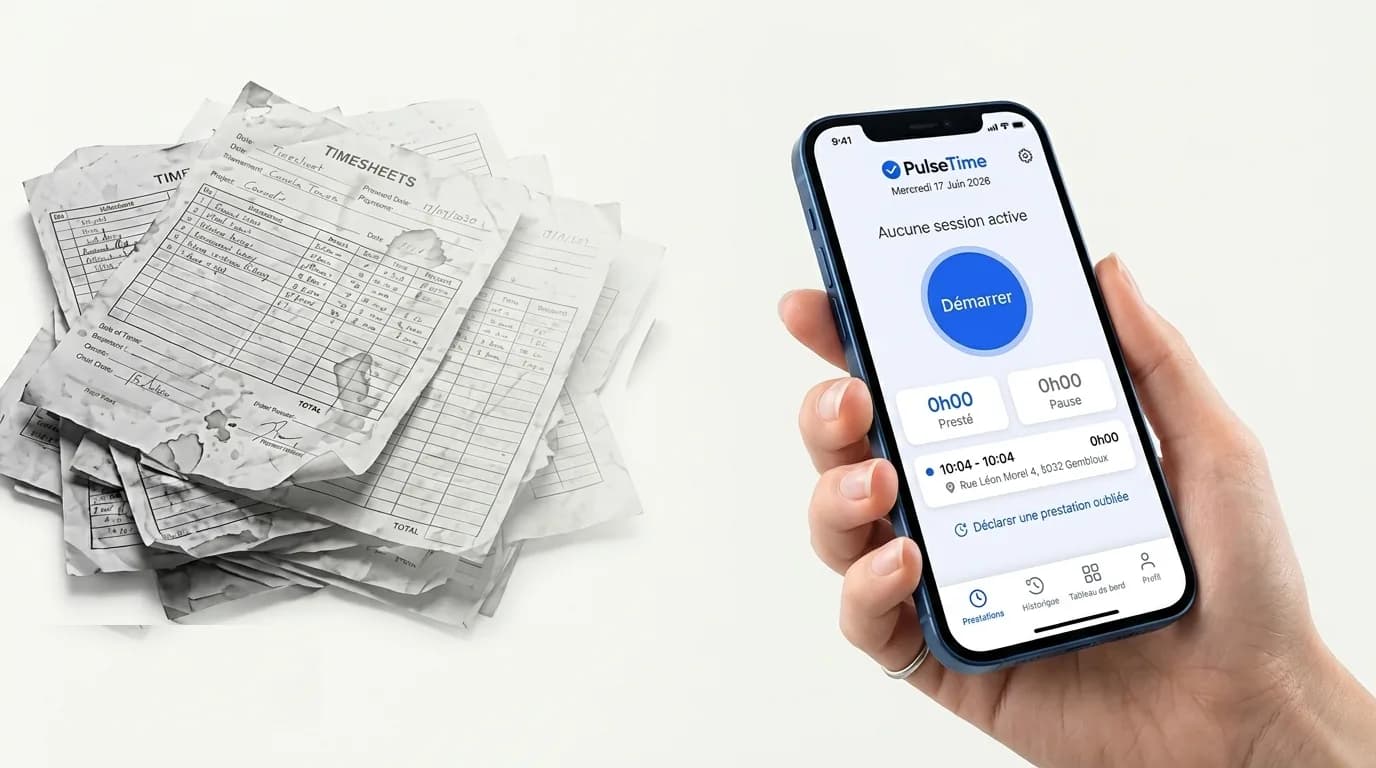
Still deciphering and re-typing time sheets at the end of every month? Between the forgotten entries, the calculation errors and the disputes, the paper time sheet costs far more than it seems. And with the working-time registration requirement looming for 2027, now is the right moment to turn the page. Here are 5 reasons to go digital.
1. No more calculation errors
Adding up hours by hand, handling breaks, late arrivals and overtime: every month it is a source of errors, and of friction with your team members. A 15-minute error per day per person, multiplied by a team and a month, ends up weighing heavily. With digital time tracking, hours are calculated automatically, without a single manual operation.
2. You get hours back every month
Collecting the sheets, chasing them up, deciphering handwriting, re-keying the data into a spreadsheet, sending everything back to the payroll provider… That time is spent on paperwork instead of your actual job. Digital time tracking consolidates everything in real time and exports in one click.
3. No more forgotten entries or disputes
"I really did start at 8, not 8:30": without a reliable record, it is one person's word against another's. A timestamped entry (geolocated at the moment of clocking in) settles the matter. Everyone sees their own hours, in full transparency, and there is no longer any dispute possible at month-end. It is calmer for you and for your teams.
4. You are ready for the 2027 law
The principle of a mandatory working-time registration is set out in the federal government agreement, with entry into force targeted for 1 January 2027. The law has not yet been voted and some details remain to be clarified, but one thing is certain: the paper sheet will no longer be enough. Going digital now means anticipating calmly rather than in the rush of late 2026.
5. You see the hours in real time
Who is present, who has clocked in, how many hours this week? No need to wait until the end of the month: you follow activity day by day from a dashboard, wherever you are. Handy for spotting a missed clock-in the same day, anticipating overtime or simply keeping a clear view of your team.
The hidden cost of the paper sheet
We tend to see paper as "free". In reality, its cost is very real, it is just invisible:
- ✓the time spent each month collecting, re-keying and checking;
- ✓the calculation errors, which cost you one way or the other;
- ✓the disputes and the loss of trust they create;
- ✓the risk of non-compliance as 2027 approaches.
Added together, these small costs far exceed that of a digital solution designed for SMEs.
Going digital has never been this simple
Good news: no expensive time clock and no hardware to install. Your team members clock in with one tap, in the way that suits your business:
- ✓Smartphone with GPS, ideal on construction sites and for mobile teams;
- ✓QR code to scan at the entrance;
- ✓Reception tablet, kiosk-style.
Set up in 5 minutes, with no commitment. That is exactly what PulseTime does, built for Belgian SMEs and ready for the 2027 law.
This article is for information only and does not constitute legal advice.